
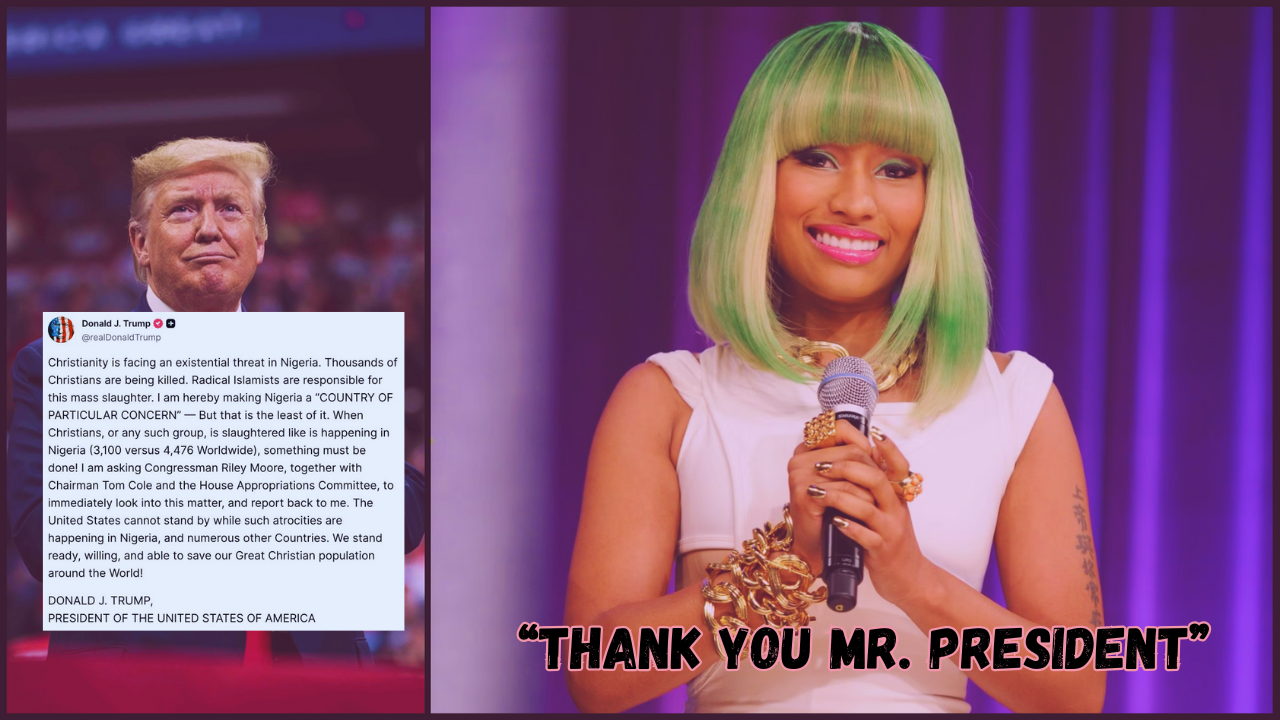
A prominent music figure drew widespread attention after publicly responding to a presidential statement addressing the growing threat of religious persecution abroad. In her response, the artist expressed gratitude for the ability to worship freely in the United States, while urging Americans not to ignore violence faced by faith communities in other parts of the world.
The president’s message, posted earlier in the day, asserted that Christian populations in regions of western Africa continue to face targeted killings. He declared the situation an international concern, asking lawmakers to investigate and respond.
The artist’s comments — posted above the president’s message — stood out for their tone. Rather than leaning into criticism or political positioning, she instead emphasized empathy, shared humanity, and prayer.
Observers noted that the post resonated across ideological lines — a rare occurrence in the modern information environment. The message was interpreted by many as a call to remember that global crises do not exist solely as content for domestic debate.
Her language was notably personal: she thanked national leadership for elevating the issue, but refrained from moralizing. Instead, she underlined a broader theme — that respect for differing beliefs is possible without uniformity.
The response quickly circulated online, gaining traction in both entertainment and faith-based social communities. Analysts say the moment reflects a growing appetite for non-performative communication — statements that eschew cynicism in favor of reflection.
As one longtime communications strategist put it, “It wasn’t about agreement. It was about noticing suffering and refusing to treat it as background noise.”
Officials have not yet provided updated numbers regarding the situation abroad. But on social media, the conversation shifted — not toward argument — but toward empathy.
For a few hours, at least, the internet allowed space for that.




Leave a Reply