
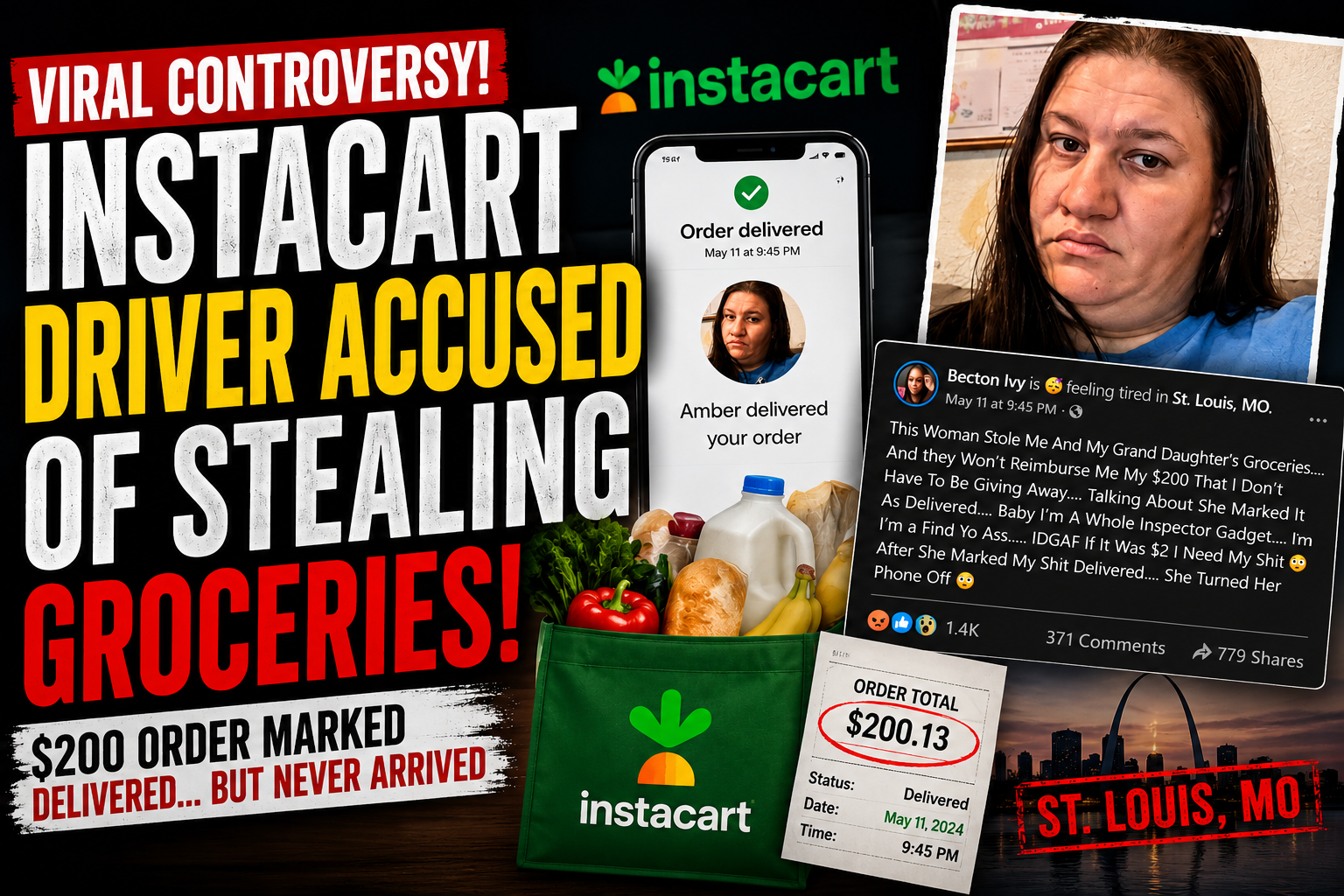


A viral social media post accusing an Instacart delivery driver of stealing groceries has exploded across Facebook, generating heated reactions online and reigniting debates about accountability in the gig economy.
The controversy began after a woman shared an emotional post claiming that an Instacart order marked as “delivered” never actually arrived. According to the post, the missing groceries were meant for both her and her granddaughter, and she alleged that customer support failed to provide immediate reimbursement.
Screenshots connected to the post quickly circulated online, including alleged Instacart delivery confirmations and images from a social media profile reportedly linked to the driver involved.
Viral Facebook Post Draws Thousands of Reactions
The original Facebook post gained significant traction after the customer publicly accused the delivery driver of taking the groceries while falsely marking the order as completed.
In the post, the woman expressed frustration over allegedly losing around $200 worth of groceries and claimed she could not afford to replace them immediately. She also criticized Instacart’s response process, suggesting she struggled to receive timely assistance after filing complaints.
The emotional nature of the post resonated with many social media users, especially as grocery prices continue rising across the United States.
Screenshots Fuel Online Speculation
Multiple screenshots shared online appear to show:
- An Instacart order marked as delivered
- A profile image allegedly connected to the delivery driver
- A separate social media profile that users began circulating widely online
As the images spread, online reactions intensified, with some users calling for accountability while others warned against harassment or making assumptions before all facts are verified.
At this time, there has been no public confirmation from Instacart regarding the specific claims circulating online.
Gig Economy Delivery Complaints Continue To Rise
The viral incident has also reignited broader conversations about the gig economy and customer trust in delivery apps.
Services like Instacart, DoorDash, Uber Eats, and others rely heavily on independent contractors to fulfill orders quickly. While millions of deliveries are completed successfully every day, disputes involving missing deliveries, incorrect orders, and customer-driver conflicts frequently go viral online.
Some users argued the controversy highlights weaknesses in delivery verification systems, especially for high-cost grocery orders. Others defended delivery drivers, pointing out that social media often rushes to judgment before investigations are completed.
Social Media Reactions Become Divided
The online reaction quickly split into multiple camps:
- Some users strongly sided with the customer and demanded stricter oversight from delivery apps.
- Others cautioned against publicly posting personal information tied to alleged drivers.
- Some defended gig workers broadly, arguing that isolated incidents should not define an entire industry.
The situation reflects how quickly modern consumer disputes can escalate once screenshots and personal accusations begin circulating across platforms like Facebook, TikTok, and X.
Instacart And The Challenge Of Customer Trust
Incidents like this can significantly impact public perception of delivery platforms, especially when stories gain viral momentum before official investigations conclude.
For many customers, grocery delivery apps have become essential services. But controversies involving missing orders and refund disputes continue raising questions about customer protection, fraud prevention, and accountability within app-based delivery systems.
Whether this specific case results in formal action remains unclear, but the viral spread of the story demonstrates the growing influence of social media in shaping public narratives around customer service disputes.



Leave a Reply