
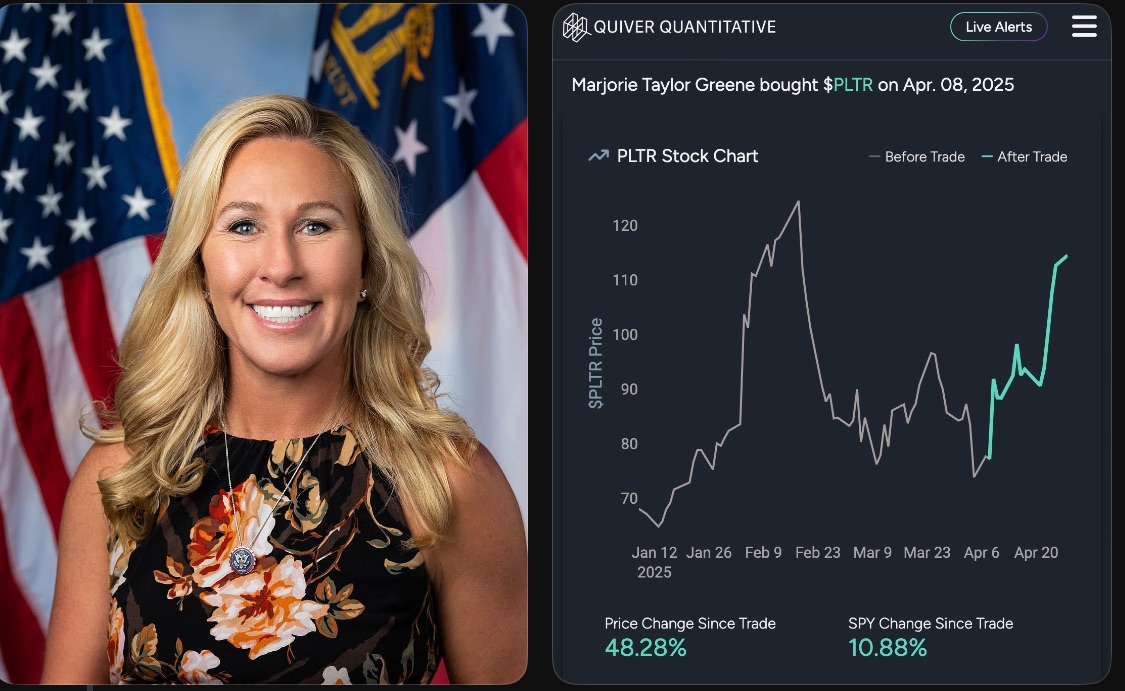
WASHINGTON, D.C. — Representative Marjorie Taylor Greene (R-GA) is facing scrutiny after newly filed disclosures revealed she purchased stock in Palantir Technologies Inc. just days before the company secured a major $30 million federal contract with U.S. Immigration and Customs Enforcement (ICE).
According to a financial transaction report submitted to the House of Representatives, Greene purchased Palantir stock on April 8. Nine days later, on April 17, ICE publicly announced a contract with Palantir to expand its data and surveillance capabilities—services the tech firm has long provided to federal agencies.
Greene currently sits on the House Committee on Homeland Security, which oversees ICE and other federal security operations. Since her purchase, Palantir’s stock has surged approximately 48%, significantly increasing the value of her investment.
A spokesperson for Rep. Greene did not return requests for comment.
While there’s no direct evidence that Greene violated insider trading laws, government watchdogs say the timing raises red flags.
“Even if this isn’t illegal, it clearly erodes public trust,” said Kedric Payne, senior director of ethics at the Campaign Legal Center. “When lawmakers trade stocks connected to their committees, it raises serious ethical concerns.”
Under the STOCK Act of 2012, members of Congress are prohibited from trading on nonpublic information and are required to report transactions within 45 days. However, the law does not bar them from trading stocks related to industries they oversee—something critics say is a major loophole.
Palantir, which provides data analytics tools to numerous U.S. government agencies, has become a major player in federal contracting. The ICE deal announced in April further strengthens its position in the national security and immigration technology space.
The incident reignites debate over congressional stock trading. Lawmakers from both parties have faced criticism for similar trades, with ongoing efforts to tighten trading rules for elected officials largely stalled in Congress.
Calls for reforms such as mandatory blind trusts or outright bans on individual stock ownership continue to gain public support. Whether this latest case will spark legislative action remains to be seen.




Leave a Reply